
How the Winding Process works
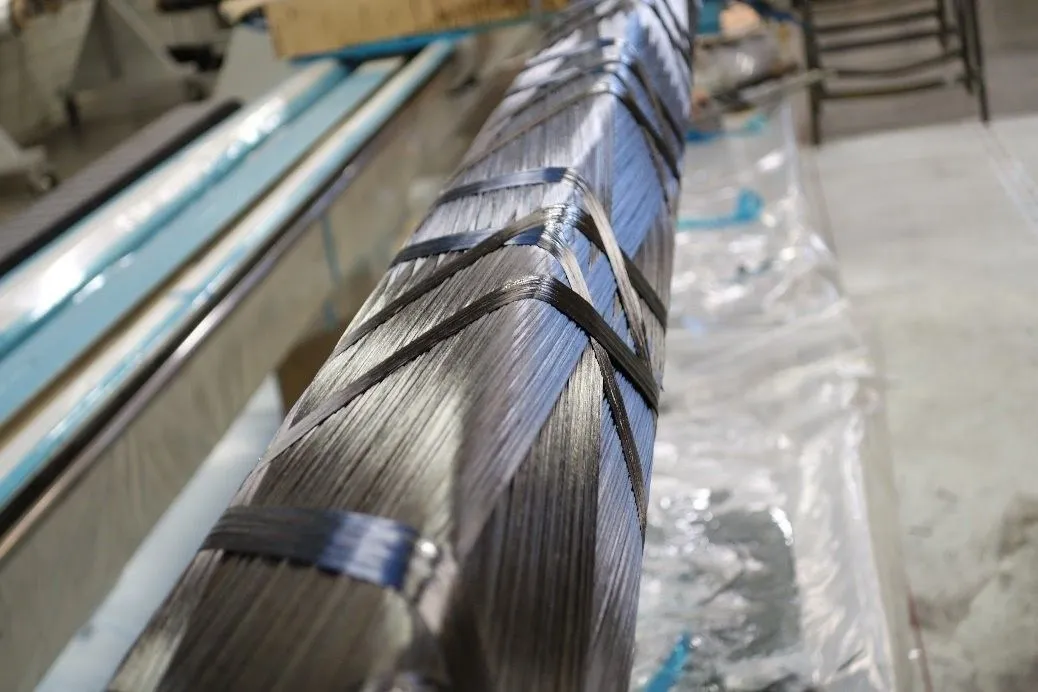
In the winding process, continuous fibers (e.g., carbon, glass, or aramid fibers) are impregnated with a matrix (e.g., epoxy or polyester resin) and then controlled to wind around a rotating form (mandrel or core). Depending on the winding technique and fiber orientation, various mechanical properties are achieved.
Winding Process steps
- Fibre preparation: The fibers are drawn from spools and passed through a resin bath or impregnation unit.
- Winding: The fibers are wound onto the rotating mandrel. The winding angles can be varied (axial, diagonal, circular) to achieve the desired properties.
- Curing: The wound structure is cured under controlled conditions (e.g., by heat or UV light).
- Mandrel removal: After curing, the mandrel can be removed (for soluble or inflatable mandrels) or remain as part of the component.
Advantages of the Winding Process
- High material efficiency: The directed deposition of fibers ensures optimal load distribution.
- Automation potential: The process is highly automatable, ensuring consistent quality.
- Excellent mechanical properties: The high fibre orientation results in very lightweight and yet highly durable components.
- Cost efficiency for series production: Particularly attractive for medium to high quantities.
- Reproducibility: Computer-controlled winding allows precise control over material deposition.
Applications
- Pressure vessels and tanks: Gas and hydrogen tanks for aerospace and the automative industry.
- Rocket casings and aircraft components: Lightweight applications for aerospace and aviation.
- Rotor blades for wind turbines: Wound structures enhance stability and durability.
- Sport equipment: High-performance components like bicycle frames, golf clubs, and tennis rackets.
- Pipelines and masts: Corrosion-resistant pipes for the chemical industry and offshore applications.

High strength with low weight
Maximum performance with minimal material usage, ideal for lightweight construction applications.

Customizable properties
The precise combination of fibers and matrix materials allows mechanical, thermal, and chemical properties to be tailored exactly to the requirements.

Corrosion-Resistance
Excellent resistance to environmental influences and chemicals, which extends the lifespan of the components.

Design freedom
Enables the realization of complex geometries and innovative structures that would be difficult to achieve with traditional materials.